
The Best Time to Seal Your Driveway in Ontario Before Freeze-Thaw Season Does the Work for You
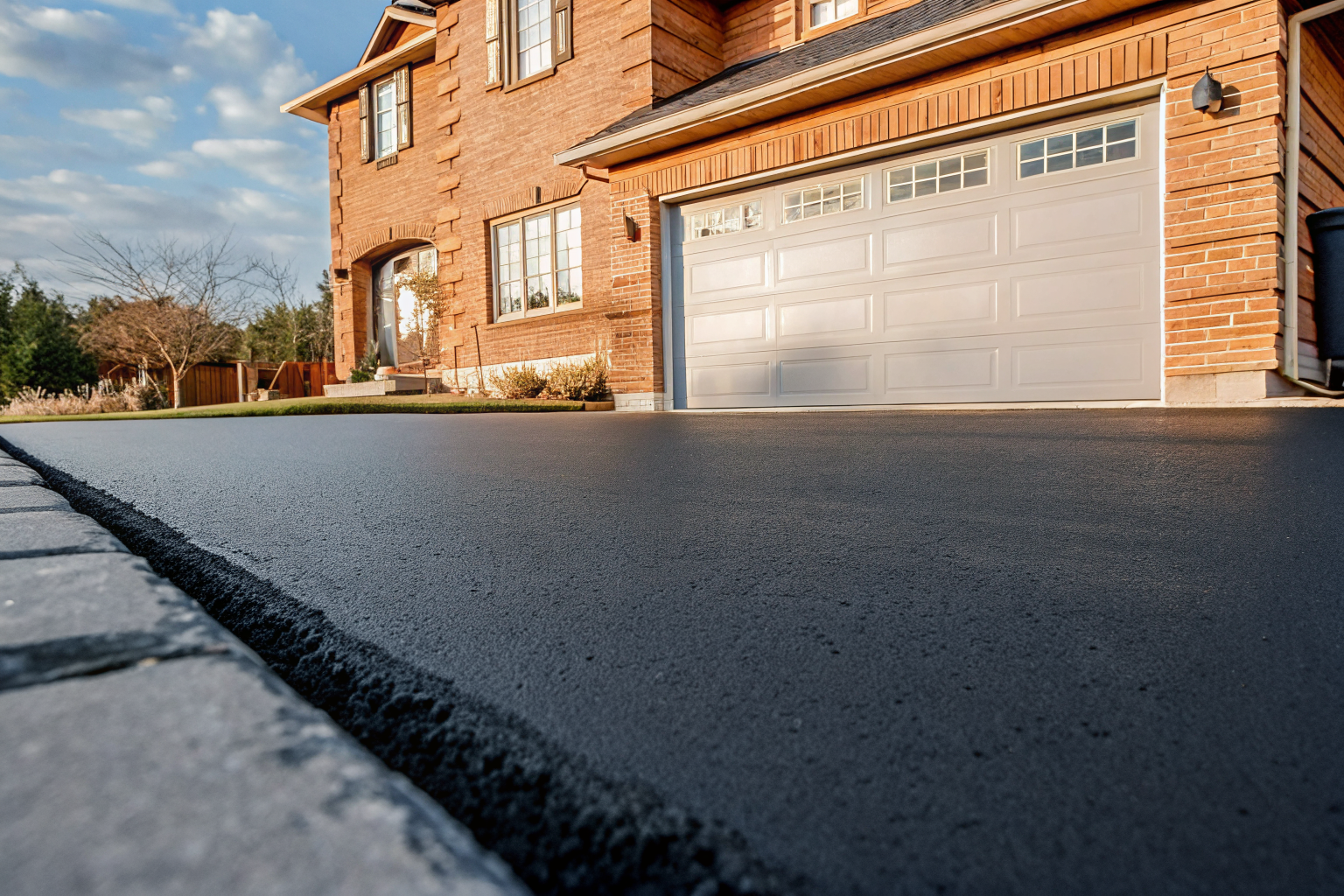
Ask any driveway crew in Kitchener-Waterloo when the calls change from "can you seal my driveway" to "can you fix my driveway," and they will all tell you the same thing: right around the first hard frost. By November, the cracks that were barely visible back in September have opened up, and by then there is nothing to do but wait for spring. It happens almost every year, and it is almost always avoidable.
Why Ontario's Freeze-Thaw Cycle Is So Hard on Asphalt
Southern Ontario does not get one long, steady winter. It gets dozens of freeze-thaw cycles between November and March, a day or two above zero followed by a hard drop back down, over and over. Water gets into every hairline crack in unsealed asphalt, freezes, and expands by roughly 9 percent as ice. That prying action widens the crack a little more each time. It thaws, the water works in a bit deeper, and the cycle repeats through the whole winter. A crack that was barely worth mentioning in October can be a real problem by April, with chunks of asphalt lifting and water pooling underneath.
Sealcoating works because it keeps that water from ever getting in. But sealer only protects your driveway if it is fully applied and cured before the freeze-thaw cycles start, which is exactly why the calendar matters just as much as the product itself.
The Temperature Window That Actually Matters
Sealer needs daytime temperatures consistently above 10°C, with no frost overnight, both on the day it goes down and for the 24 to 48 hours it needs to cure. That is a real window in Ontario, but it is not an open-ended one. Push the job into late October and you are betting on two or three straight mild days in a month that is famous for not cooperating. A cold snap that rolls in a day early can leave sealer that never bonded the way it should, and instead of protecting your driveway through the winter, it fails during it. That is the difference between sealing in July and sealing in the last week of October: one is routine, the other is a gamble with the same product.
Month by Month for Kitchener-Waterloo Driveways
Late May through September is the safe stretch for this region. May and June bring warm, dry, stable weather with a wide buffer on both ends if a job needs to be rescheduled around rain. July and August are peak season for a reason: consistent heat cures sealer fast and even, with little risk of an unexpected cold night undoing the work. September still works well, especially the first half of the month. Once you get past the third week, the buffer starts shrinking fast.
October is where fall sealing turns into a race against the calendar. Some years you will get a mild stretch that carries a job through just fine. Other years the first frost shows up before Thanksgiving weekend, and anything sealed in the back half of the month never gets a fair shot at curing properly. If it has been more than two or three years since your driveway was last sealed, or you are already seeing hairline cracks along the edges, do not wait to find out which kind of October you will get this time.
Why Spring and Early Summer Book Up Fast
This is not a manufactured push, it is just how the season plays out here every year. The moment the snow clears, everyone who noticed their driveway needed attention over the winter starts calling at once, and the number of good working days in June and July only stretches so far for any one crew. Homeowners who book in April or May get their pick of dates. Homeowners who wait until August are choosing from whatever is left on the calendar, and homeowners who wait until October are hoping the weather holds. If you already know this is the year, getting on the schedule before the season gets busy is the easy part. Waiting is the part that costs you.
The short version: the best time to seal your driveway in Ontario is while the weather is actually working with you, not while you are hoping it holds for one more weekend. A crack you deal with now, in summer heat, costs a lot less than the same crack after a full winter of freeze-thaw got its hands on it.
Ready to get your driveway on the schedule before the season fills up? Get your driveway sealing price and book your date.
